Polaris CDN Goes Semantic: What Shopify Developers Need to Know

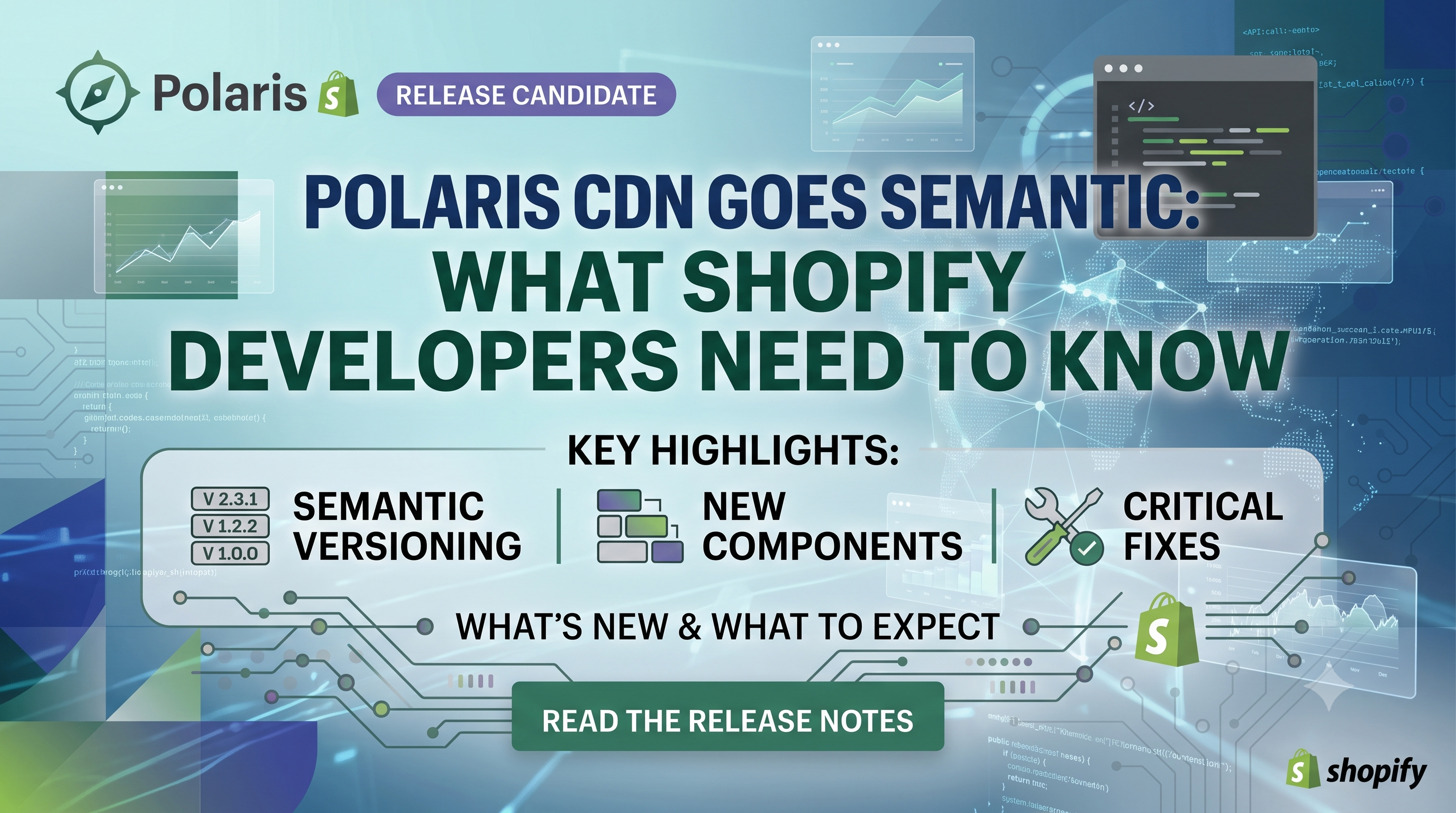
Shopify’s Polaris CDN now follows semantic versioning, giving developers control over breaking changes while still receiving automatic improvements. Learn who’s affected and how to adapt your apps today.

Polaris CDN Goes Semantic: What Shopify Developers Need to Know
7 sections

Shopify just announced a major shift for Polaris Web Components loaded from its CDN: they’ll now follow semantic versioning. This change promises clearer upgrade paths, better stability, and more control for developers building third‑party apps. In this post we break down exactly what’s changing, who it impacts, and the steps you should take to keep your integrations running smoothly.

What’s Changing: Semantic Versioning for the Polaris CDN

Previously, the Polaris CDN was a single, ever‑evolving script (polaris.js) that silently introduced new features and occasional breaking changes. Now, each release will be tagged with a semantic version (MAJOR.MINOR) and served from distinct URLs. “Major” releases may contain breaking API or behavioral changes, “minor” releases bring compatible enhancements, bug fixes, accessibility updates, and visual tweaks. Security patches can be back‑ported to older stable releases.

Who Is Affected

The change only touches third‑party apps that load Polaris components directly from the Shopify CDN and developers using the @shopify/polaris-types npm package. It does not affect App Home UI extensions, Admin UI extensions, or App Bridge, which have their own versioning strategies.

How It Works: Release Channels

Shopify provides three ways to consume the CDN:

  • Automatic compatible updates (stable channel) – Use the generic URL https://cdn.shopify.com/shopifycloud/polaris-1.js. This URL always points to the latest stable minor release within the current major version. It will never jump to a new major version without explicit action from you.
  • Pinned releases – If you need absolute consistency, pin to a specific minor version, e.g. https://cdn.shopify.com/shopifycloud/polaris-1.1.js. A pinned release stops receiving new features, fixes, or visual changes until you update the URL yourself.
  • Release candidates (RC) – For testing upcoming changes, load the RC URL such as https://cdn.shopify.com/shopifycloud/polaris-1.1-rc.js. The RC script accumulates improvements during its candidate window and updates in‑place, giving you a safe sandbox to validate breaking changes before they hit stable.
  • Actionable Steps for Developers

  • Audit your script tags. If you’re still using the old polaris.js URL, switch to the stable channel (polaris-1.js). The old URL will continue to be updated in lockstep with the new stable channel, but moving now future‑proofs you against the upcoming major version bump.
  • Update @shopify/polaris-types. The npm package now mirrors the CDN’s major version. Run npm install @shopify/polaris-types@^1 to stay aligned with the current major release. When a new major is released, you’ll need to bump the version manually.
  • Plan for major upgrades. When Shopify publishes a new major (e.g., polaris-2.js), the URL will change. Schedule a review of your component usage, run regression tests, and only then update the script tag. This explicit step prevents unexpected breakage in production.
  • Consider pinning for critical apps. If your app’s UI must remain pixel‑perfect, pin to the exact minor version you’ve certified. Remember to set a reminder to revisit the pin after each minor release to benefit from security patches and accessibility fixes.
  • Leverage release candidates. Add the RC URL to a staging environment and run your UI test suite. When you see a breaking change, you can either adapt your code now or decide to stay on the current stable version until you’re ready.
  • Testing Upcoming Changes

    Shopify will publish a release‑candidate script for each upcoming minor version. For example, to test Polaris 1.1 before it becomes stable, include:

    <script src="https://cdn.shopify.com/shopifycloud/polaris-1.1-rc.js"></script>

    Run your component integration tests against this URL. Any breaking API change will be visible early, giving you ample time to adjust your code or file a bug with Shopify.

    Best Practices & Takeaways

  • Stick with the stable channel for most apps – it gives you automatic minor updates without the risk of breaking changes.
  • Pin only when you have a concrete need for freeze‑frame stability, and set a process to un‑pin after each minor release.
  • Use the RC builds in CI pipelines to catch breaking changes before they reach production.
  • Keep @shopify/polaris-types in sync with the CDN version you serve; mismatched types can cause TypeScript compile errors.
  • Document your versioning strategy in your repo’s README so future contributors know how and when to upgrade.
  • Conclusion & Call to Action

    Semantic versioning brings the Polaris CDN into line with modern JavaScript best practices, giving you the predictability you need while still benefiting from continuous improvements. Update your script tags, align your @shopify/polaris-types dependency, and start testing RC builds today. Need help migrating or want a deeper dive? Drop a comment below or reach out to our Shopify development team for a free audit of your Polaris integration.
    Tags
    Sources

    Related Articles

    Shopify Storefronts Now Support UCP 2026‑08‑25 – What Developers Need to Know
    Platform Updates

    Shopify Storefronts Now Support UCP 2026‑08‑25 – What Developers Need to Know

    Shopify’s storefronts now advertise support for the Universal Commerce Protocol version 2026‑08‑25, enabling seamless capability negotiation for platforms and agents. Learn what changed, who’s impacted, and the exact steps you should take.

    September 4, 20263 min
    Staff Can Now View Customers’ Online Carts Directly in Shopify POS
    Platform Updates

    Staff Can Now View Customers’ Online Carts Directly in Shopify POS

    Shopify POS v11.14 now lets authorized staff see an identified customer’s abandoned online cart at checkout. Learn who this impacts, how to enable the permission, and actionable steps to boost in‑store conversions.

    September 3, 20263 min
    Hydrogen Developer Preview Unleashed: Variant Links, Cart Refresh, and Local HTTPS Made Simple
    Platform Updates

    Hydrogen Developer Preview Unleashed: Variant Links, Cart Refresh, and Local HTTPS Made Simple

    Shopify’s Hydrogen preview adds variant‑specific links, automatic cart refresh, and one‑command local HTTPS certificates—essential upgrades for developers building custom storefronts. Learn what changed, who’s impacted, and how to implement them today.

    September 3, 20264 min
    Instant Connectivity Insight: New POS Home Status Icon
    Platform Updates

    Instant Connectivity Insight: New POS Home Status Icon

    Shopify POS now shows a real‑time connectivity icon right on the Home screen, letting staff confirm device readiness before checkout. Learn what changed, who it impacts, and how to make the most of this seamless update.

    September 1, 20264 min