Affiliate marketing is one of the most cost-effective ways to grow your e-commerce brand without upfront ad spend. Instead of pouring money into unpredictable paid advertising campaigns, you only pay a commission when an affiliate partner (such as influencers, content creators, publishers, or loyal customers) successfully drives a sale using their unique link or discount code.
According to a study by the Performance Marketing Association (PMA), affiliate marketing generated over $113 billion in e-commerce sales in a single calendar year—accounting for nearly 10% of all US e-commerce sales.
If you want to tap into this lucrative sales channel, choosing the right products to promote is key. Here are the top 7 affiliate product categories with high consumer demand in 2026, along with actionable tips to build a highly successful affiliate program.
1. What Are Affiliate Products?
An affiliate product can be any physical or digital item your business sells. It becomes an "affiliate product" once it is promoted by an affiliate partner in exchange for a commission on successful conversions.
While affiliate marketing works across most industries, certain product characteristics determine its success:
High-Ticket vs. Low-Ticket Affiliate Products
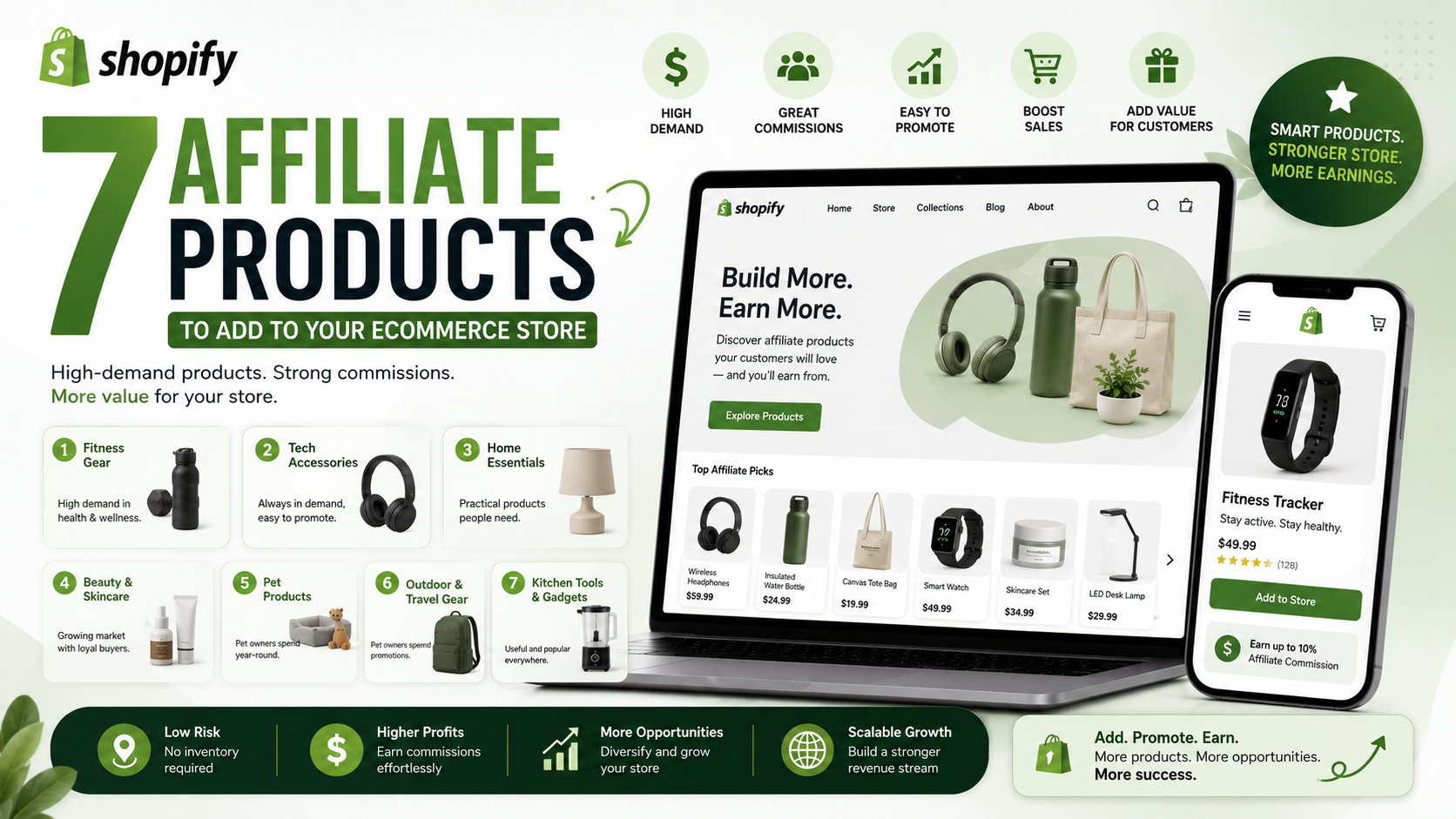
2. 7 Top Affiliate Products to Add to Your E-Commerce Store
These categories are showing exceptionally strong affiliate engagement and consumer demand in 2026.
1. Electronics and Tech Accessories
Products like wireless earbuds, smart home gadgets, and productivity accessories show no signs of slowing down, with global revenue continuously climbing.
2. Health and Wellness
From premium vitamins and protein powders to meditation apps and ergonomic supports, the wellness industry is projected to reach nearly $10 trillion by 2029.
3. Home Goods and Furniture
This category spans bedding, smart kitchen appliances, storage solutions, and home decor.
4. Beauty and Personal Care
With a massive, highly engaged creator ecosystem on TikTok, Instagram, and YouTube, the beauty sector is a natural fit for affiliate programs.
5. Outdoor and Sporting Goods
High-quality hiking gear, camping equipment, and cycling accessories often carry a premium price tag (top brands often see an AOV exceeding $160).
6. Digital Products and Online Courses
Ebooks, design templates, software licenses, and online masterclasses are goldmines for e-commerce brands due to their near-zero marginal cost of replication and distribution.
7. Travel and Experiences
From luggage and travel accessories to travel booking platforms and local tours, this industry remains a powerhouse in 2026.
3. Best Practices for Promoting Your Products with Affiliate Marketing
Creating a successful affiliate program is about more than just setting up tracking links. You need to foster a supportive ecosystem for your partners.
Leverage an Established Affiliate Network
Instead of building a system from scratch, use reliable networks like Shopify Collabs, Amazon Associates, or CJ Affiliate. These platforms provide:
Recruit the Right Affiliates (Focus on Alignment over Audience Size)
Do not just chase creators with millions of followers. Micro-influencers (10,000 to 100,000 followers) often boast much higher engagement rates and have highly dedicated, niche audiences.
Offer Rewarding, Performance-Based Incentives
Keep your affiliates motivated by setting up a tiered commission structure.
Make the Affiliate Experience Frictionless
Affiliates will prioritize promoting brands that make their jobs easy:
Conclusion
Affiliate marketing is a win-win strategy that aligns your business growth with the success of your creative partners. By selecting high-demand products, offering attractive incentives, and providing your affiliates with the right tools, you can build an automated, scalable sales machine that continuously drives revenue for your e-commerce store.