Migrating from PrestaShop to Shopify

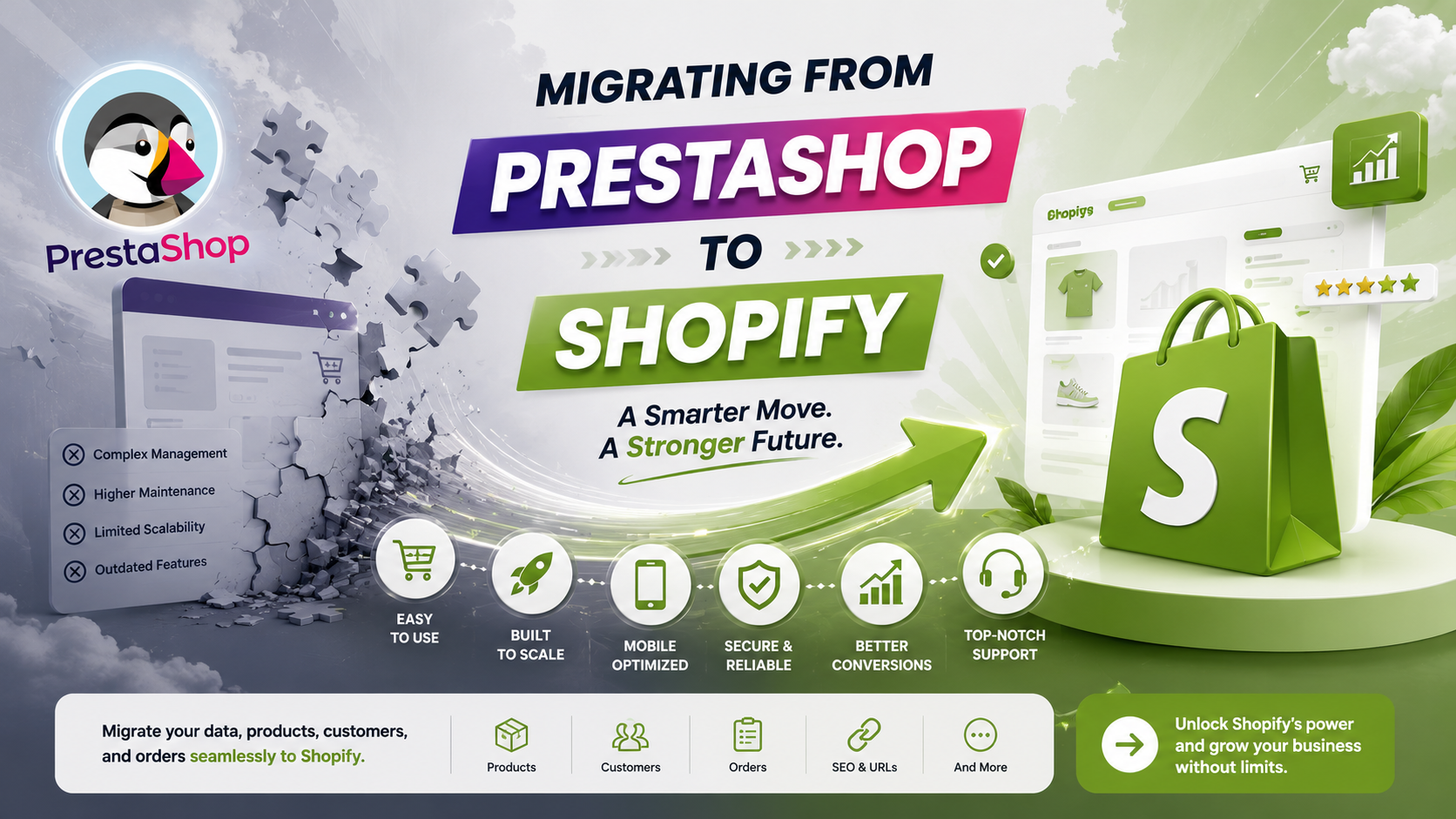
Migrating an e-commerce store from an open-source platform like PrestaShop to a hosted SaaS solution like Shopify is a common step for growing businesses looking to simplify store management and infrastructure overhead.

Migrating from PrestaShop to Shopify
4 sections

1. Setting Up a Sandbox: Development Stores via Shopify Partners

Before committing to a paid plan or making live changes, experienced Shopify developers recommend creating a Development Store via a Shopify Partner Account:

  • Unlimited Testing Environment: Unlike standard trial periods, Shopify Partner development stores remain free for testing until you transfer ownership to a client or select a live plan.
  • Local Theme Development: Developers can use the Shopify CLI to link a local code editor (like VS Code) directly to the development store. This allows version control with Git and keeps custom work private before launch.
  • 2. Data Migration: Tools & Technical Caveats

    Transferring catalog data, customer records, and order history requires careful mapping between PrestaShop's relational database and Shopify's architecture.

  • Automated Migration Apps: Services like LitExtension, Cart2Cart, or Matrixify are widely used to automate data transfers via APIs.
  • CSV Bulk Import: Matrixify offers robust file-based importing for custom field mapping and large product catalogs.
  • Key Technical Pitfalls to Watch:

  • Customer Password Resets: PrestaShop and Shopify use different password hashing algorithms. Customer passwords cannot be transferred. You must send account activation emails to customers post-launch to let them set new passwords.
  • SEO & 301 Redirects: PrestaShop and Shopify have vastly different URL structures (Shopify enforces fixed sub-paths like /products/ and /collections/). Setting up 301 redirects immediately after going live is vital to preserve domain authority and search rankings.
  • Custom Fields & Metafields: Custom product fields or PrestaShop module data must be mapped directly to Shopify Metafields.
  • 3. Rebuilding Custom Themes & Navigating Performance

    A major topic of discussion among developers migrating custom PrestaShop setups is recreating theme functionality and maintaining site speed:

    Theme Architecture Differences:

  • PrestaShop relies on Smarty or Twig templates, whereas Shopify uses Liquid combined with JSON templates, Sections, and Blocks (Online Store 2.0). Theme files cannot be directly converted; they must be rebuilt from scratch.
  • The Performance Dilemma:

  • Infrastructure Differences: PrestaShop allows full control over server configuration, caching (e.g., Redis/Memcached), and asset optimization, often making high PageSpeed scores easier to achieve. Shopify runs on a managed closed infrastructure.
  • Optimization Strategies for Shopify:
  • Minimize reliance on heavy third-party apps that inject external JavaScript.
  • Optimize images using modern formats (WebP) and lazy loading.
  • Reduce complex nested Liquid queries in layout files.
  • For stores requiring extreme performance control, adopting a Headless Commerce setup (using the Shopify Storefront API with frameworks like Next.js or Hydrogen) is an alternative to traditional Liquid themes.
  • 4. Migration Checklist Overview

  • 🟢 Step 1: Register for a free Shopify Partner account and create a Development Store.
  • 🟡 Step 2: Run a Demo Migration using your chosen tool to verify product variants, customer fields, and order history structure.
  • 🔵 Step 3: Rebuild your theme layout using Liquid and Shopify's native section architecture.
  • 🔴 Step 4: Map out all old URLs and prepare your 301 Redirects file.
  • 🟣 Step 5: Execute the full migration, switch DNS settings, send customer activation invites, and monitor traffic and 404 logs.
  • Tags

    Related Articles

    Best Email Marketing for Shopify store
    Tips & Tricks

    Best Email Marketing for Shopify store

    Choosing the right email marketing tool can make or break your Shopify store’s revenue. While driving traffic to your site is expensive, email marketing gives you a direct channel to retain customers, increase order values, and turn one-time shoppers into repeat buyers

    July 22, 202610 min
    Unlocking Shopify Storefront API with JavaScript: Overcoming Liquid & AJAX API Limits
    Tips & Tricks🔥Must Read

    Unlocking Shopify Storefront API with JavaScript: Overcoming Liquid & AJAX API Limits

    In this article, we’ll explore the specific limitations of Liquid and the AJAX API, how GraphQL via the Storefront API solves them, and how to set up your access tokens securely

    July 19, 202615 min
    7 Best Affiliate Products to Boost Your E-Commerce Store’s Revenue (2026)
    Tips & Tricks

    7 Best Affiliate Products to Boost Your E-Commerce Store’s Revenue (2026)

    Affiliate marketing is one of the most cost-effective ways to grow your e-commerce brand without upfront ad spend. Instead of pouring money into unpredictable paid advertising campaigns, you only pay a commission when an affiliate partner (such as influencers, content creators, publishers, or loyal customers) successfully drives a sale using their unique link or discount code.

    July 17, 202612 min
    6 Actionable Shopify Merchandising Tips to Boost Conversions
    Tips & Tricks

    6 Actionable Shopify Merchandising Tips to Boost Conversions

    Improve your store's visual appeal and increase sales with these practical Shopify merchandising tips, covering product grouping, brand identity, and more. Learn how to create a high-converting merchandising strategy and scale your business. Discover the best apps and tactics for merchandising on Shopify.

    July 12, 20263 min